Advertisements
Look, I’m not going to sugarcoat this. Cleaning isn’t glamorous. Nobody dreams as a kid about scrubbing toilets or mopping floors for a living. But you know what? It’s honest work that pays in American dollars, and for many foreigners, it’s a legitimate way to get your foot in the door in the United States.
So let’s cut through the hype and the scams and talk about what cleaning jobs with visa sponsorship actually look like in 2025. The real wages, the actual visa options, which companies actually hire foreigners, and whether it’s worth it for you.
Why America Needs Foreign Cleaners
Here’s the simple truth: Americans don’t want to clean anymore. At least not the way they used to.
Advertisements
There are roughly 4 million people working as janitors, maids, and building cleaners in the United States right now. And the Bureau of Labor Statistics predicts jobs will grow another 10% by 2030. That’s faster than most other occupations.
Why? Because office buildings still need cleaning. Hotels still need housekeeping. Hospitals need sanitization. Airports need maintenance. And not enough Americans want to do it.
Young Americans would rather deliver food for DoorDash or work retail. Older Americans are retiring. That leaves massive gaps that employers are filling with foreign workers through visa sponsorship programs.
For you, that gap represents opportunity. Real, legitimate jobs that actually sponsor visas exist in the cleaning industry. You just need to know where to look and what to expect.
What You’ll Actually Earn
Let’s talk money because that’s probably why you’re here.
The national average for cleaners ranges between $14 to $18 per hour depending on the source and type of cleaning work. ZipRecruiter says the average janitor makes $15.89 per hour, with most earning between $13.70 (25th percentile) and $17.55 (75th percentile). Glassdoor reports $19 per hour or $38,924 annually for janitors. Salary.com shows $18 per hour or $37,945 annually. Indeed reports $16.01 per hour based on nearly 40,000 salary submissions.
So realistically, expect to earn somewhere between $15 to $18 per hour when you start. With experience and in expensive cities, you might push toward $20 to $22 per hour, but that’s not the norm.
What That Means In Your Pocket:
Let’s do the math for someone earning $16 per hour working full time (40 hours per week).
That’s $640 per week before taxes. After federal income tax, Social Security, Medicare, and possibly state income tax (roughly 20 to 25% total), you’ll take home about $480 to $512 per week, or roughly $1,920 to $2,048 per month.
Now subtract living costs. Rent for a room in a shared apartment: $500 to $900 per month depending on where you are. Food if you cook at home: $300 to $400 per month. Transportation (bus passes or gas): $100 to $200 per month. Phone, internet, miscellaneous: $100 to $200 per month.
Total expenses: roughly $1,000 to $1,700 per month depending on your city and lifestyle.
After covering basics, you’re left with maybe $200 to $1,000 per month that you can save or send home. In expensive cities like New York or San Francisco, it’ll be on the lower end. In affordable places like Texas or Georgia, you’ll have more left over.
It’s not going to make you rich. But for people from countries where that $300 to $500 monthly savings represents serious money, it’s meaningful.
The Geographic Reality:
Where you work matters enormously. Massachusetts cleaners earn $21.43 per hour. Mississippi cleaners earn $13.27 per hour. That’s a 61% difference for doing basically the same work.
California, Massachusetts, Alaska, Washington, and Hawaii pay the highest wages. Southern states like Mississippi, Arkansas, Alabama, and Louisiana pay the lowest. But remember: higher wages usually mean higher living costs.
Sometimes earning $14 per hour in Arkansas leaves you with more money in your pocket than earning $20 per hour in California because rent is three times higher there.
Types of Cleaning Jobs Available
Not all cleaning work is the same. Understanding the different types helps you know what you’re applying for.
Residential House Cleaners:
You clean people’s homes. Dusting, vacuuming, mopping, bathroom cleaning, kitchen cleaning. The work is straightforward but you’re often working alone or with one partner. Some families become regular clients you see weekly. Average pay: $15 to $20 per hour. Tips are possible from generous clients.
Hotel Housekeepers:
You clean hotel rooms on a schedule. Make beds, change linens, clean bathrooms, restock amenities, vacuum. It’s repetitive but you get into a rhythm. Often the fastest workers get the most rooms and therefore more pay. Average pay: $13 to $18 per hour. Hotels frequently sponsor H-2B visas for seasonal positions, especially at resorts.
Office and Commercial Building Cleaners:
You clean office spaces, usually in the evening after workers leave. Empty trash, vacuum carpets, clean bathrooms, wipe down desks and surfaces. The work is steady and predictable. Average pay: $14 to $18 per hour. Often offers full time hours with benefits.
Hospital and Medical Facility Cleaners:
You clean in healthcare settings which require strict sanitation protocols. More training is needed, and the work is more detailed. You might need to handle biohazard waste properly. Average pay: $16 to $20 per hour. Higher pay reflects the specialized nature and stricter requirements.
Industrial and Manufacturing Cleaners:
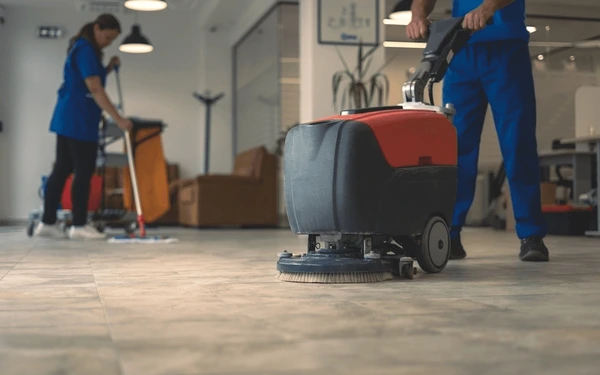
You clean factories, warehouses, and production facilities. Sometimes this involves operating machinery like floor scrubbers or pressure washers. Can be more physically demanding. Average pay: $15 to $22 per hour depending on the facility and equipment involved.
Airport and Aircraft Cleaners:
You clean airports, terminals, or the insides of airplanes between flights. Aircraft cleaning is fast paced and detail oriented. Airport work is steady. Average pay: $15.60 to $18 per hour. Airlines frequently sponsor H-2B workers for these roles.
The Visa That Actually Works: H-2B
Here’s your most likely pathway: the H-2B visa.
The H-2B is designed for temporary, non agricultural workers. It’s perfect for seasonal cleaning work at hotels, resorts, and other businesses that experience peak periods.
How It Works:
A U.S. employer sponsors you. You can’t apply yourself. An American hotel, cleaning company, or business must decide they want to hire you and be willing to do the paperwork. It’s temporary, typically valid for up to one year initially, extendable to a maximum of 3 years total.
After 3 years, you must leave the U.S. for at least 3 months before you can get another H-2B visa. The employer must prove they tried to hire Americans first and couldn’t find enough qualified workers. Given the labor shortage, this is usually easy to demonstrate.
The Reality:
For 2025, there are 66,000 regular H-2B visas plus approximately 64,000 supplemental visas, totaling around 130,000 opportunities. Many go to cleaning and hospitality workers.
The process takes 4 to 6 months from when your employer starts until you have your visa. Sometimes faster, sometimes slower depending on timing and your country.
Important: H-2B is temporary. It’s not a path to a green card or permanent residence. Some people eventually find other pathways (marriage, employer sponsored green cards, etc.), but don’t count on it. Plan on this being temporary work.
The Green Card Option: EB-3
If you’re thinking longer term, some cleaning employers sponsor EB-3 employment based green cards.
The EB-3 visa includes an “unskilled worker” category that cleaning jobs qualify for. This leads directly to permanent residence (a green card), not just temporary work authorization.
The Catch:
Processing takes forever. Expect 2 to 4 years from when your employer files until you receive your green card. The employer must go through PERM labor certification proving they can’t find American workers. After approval, they file Form I-140 with USCIS. Then you wait for your priority date to become current before you can get your green card.
Not every cleaning company does this. It’s expensive and time consuming for employers. But some larger facilities management companies, healthcare facilities, and hotel chains do sponsor EB-3 green cards for reliable cleaning staff.
If you can find an employer willing to sponsor EB-3 instead of H-2B, that’s the golden ticket. It’s permanent residence, not temporary work.
Companies Actually Hiring Foreign Cleaners
This is what you really want to know: which employers actually sponsor visas?
Major Facilities Management Companies:
ABM Industries is one of the largest facility services companies in America. They clean offices, airports, hospitals, and schools nationwide. They actively hire H-2B workers and occasionally sponsor EB-3 green cards.
Sodexo provides facilities management, food service, and integrated facilities solutions. They operate in thousands of locations and have experience hiring foreign workers.
ISS Facility Services is a global facility management company with major U.S. operations. They clean commercial buildings, airports, hospitals, and more.
CBRE (formerly CB Richard Ellis) provides commercial real estate services including janitorial services for office buildings and corporate campuses.
Aramark specializes in food service, facilities, and uniform services. They hire cleaning staff for numerous clients nationwide.
Hospitality Companies:
Marriott International sponsors H-2B workers for housekeeping positions at their hotels and resorts, particularly seasonal properties.
Hilton Hotels hires foreign housekeepers through visa sponsorship at various properties.
Omni Hotels & Resorts actively uses H-2B sponsorship for seasonal cleaning and housekeeping at resort locations.
Four Seasons Hotels and Resorts sponsors foreign workers for housekeeping roles at luxury properties.
Hyatt Hotels offers visa sponsorship for housekeeping positions at select locations.
Seasonal Resorts:
Seasonal resorts in vacation destinations are gold mines for H-2B cleaning jobs. Grand Hotel (Mackinac Island, Michigan), Mission Point Resort (Mackinac Island), Sea Crest Beach Resort (Massachusetts), and various ski resorts in Colorado, Utah, and Vermont all regularly hire H-2B housekeepers and cleaners for seasonal work.
Healthcare Facilities:
Large hospital systems and nursing home chains sometimes sponsor cleaners. Look at HCA Healthcare, Tenet Healthcare, Trinity Health, and skilled nursing facility chains. Medical facilities need year round cleaning with strict sanitation standards.
Cleaning Companies That Specialize in International Hiring:
Jani King is a national commercial cleaning franchise that has hired foreign workers at various locations.
The Maids provides residential cleaning services and some franchises sponsor workers.
ServiceMaster offers various cleaning and disaster restoration services with locations nationwide.
Molly Maid specializes in residential cleaning and some locations work with foreign staff.
Stanley Steemer focuses on carpet and upholstery cleaning with locations across the country.
How to Actually Find and Apply for These Jobs
Theory is nice. Let’s talk practical application steps.
Step 1: Search Legitimate Job Boards
Use Indeed.com and search “H-2B cleaning” or “housekeeper visa sponsorship” or “janitor visa sponsorship.” Filter by companies known to sponsor like those I listed above. Apply directly through company career websites when possible. Use Glassdoor and LinkedIn as well.
Check the U.S. Department of Labor’s official H-2B job disclosure website where employers must post certified positions. This is 100% legitimate and lists real jobs with real visa sponsorship.
Step 2: Be Realistic About Your Qualifications
Most cleaning jobs don’t require specific qualifications beyond being physically capable and reliable. You don’t need perfect English (though basic communication helps). You don’t need previous cleaning experience (though it strengthens your application). You don’t need education beyond basic literacy.
What you do need is the ability to work hard, stand for long periods, lift and move items, follow instructions, and show up consistently.
Step 3: Create a Simple Resume
Don’t overthink this. Your resume should include your contact information, any work experience (emphasize any cleaning, housekeeping, or service work), basic skills (reliable, detail oriented, physically capable), and English language level (be honest).
Keep it to one page. Clean, simple formatting. If you’re applying to American companies, have someone who speaks good English review it for grammar.
Step 4: Apply to Many Positions
Don’t just apply to two or three jobs and wait. Apply to 30 or 40 positions. Response rates are low. Most applications go unanswered. That’s normal. You need volume.
Apply to different types of cleaning work (hotels, offices, hospitals) in different locations. Cast a wide net.
Step 5: Be Patient with Interviews
If a company is interested, they’ll usually do a phone or video interview first. Be honest about your experience. Don’t lie and say you’re an expert cleaner if you’ve never done it. They know it’s not complicated and care more about reliability.
Show genuine interest in the work. Employers sponsoring visas want people who will complete their contracts, not quit after two weeks because the work is harder than expected.
Step 6: Understand What the Employer Covers
If you get a job offer with visa sponsorship, clarify what costs the employer covers. Under H-2B rules, employers must pay for visa petition fees, but you typically pay the actual visa application fee at the embassy (about $190).
Some employers provide housing or housing assistance, especially seasonal resort positions. Others don’t. Get clarity on where you’ll live and what it costs.
Some employers cover your flight to the U.S., others don’t. Ask specifically.
Step 7: Prepare for the Visa Process
Once the employer initiates sponsorship, you’ll need to provide documents including passport copies, police clearance certificate from your home country, possibly employment references, and medical examination by approved physicians.
You’ll attend a visa interview at the U.S. embassy in your country. Be honest. Explain that you’re coming for temporary cleaning work, you understand the conditions, and you plan to return home when the contract ends.
If approved, you’ll typically get your visa within a week or two.
The Real Challenges Nobody Mentions
Before you get too excited, understand what you’re actually signing up for.
The Work Is Physically Hard:
You’ll be on your feet for 8 to 10 hour shifts. Your back will ache. Your knees might hurt. You’ll be bending, reaching, scrubbing, lifting. If you’re not in decent physical shape, the first few weeks will be brutal.
Many foreigners quit within the first month because they underestimated how physically demanding cleaning actually is.
Loneliness Is Real:
You’ll be in a foreign country, possibly not speaking great English, working long hours, and potentially not knowing anyone. Homesickness hits hard, especially in the first months.
If you’re not mentally prepared for this isolation, it will be very difficult. Have a plan for staying connected with family back home and try to build a social network in America.
The Pay Doesn’t Go As Far As You Think:
What seems like great money when you’re in Nigeria, the Philippines, or India might not feel like much when you’re paying American prices for everything. A $3 coffee. $8 for lunch. $1,000 rent. America is expensive.
Budget carefully and have realistic expectations about how much you’ll actually save.
Your Employer Has Power Over You:
With H-2B visas, your visa is tied to your specific employer. If you lose the job or quit, you lose your legal status in America. This creates an imbalance where employers know you can’t easily walk away.
Most employers are fair and professional. But some take advantage. They might not pay overtime properly, create poor working conditions, or make threats about your visa status if you complain.
Know your rights. You’re protected by U.S. labor laws even as a foreign worker. Don’t be afraid to report violations to the Department of Labor if necessary.
Scams You Must Avoid
Where there’s demand, there are scammers.
Never Pay for a Job:
Legitimate U.S. employers don’t charge workers for job offers or visa sponsorship. It’s actually illegal under H-2B rules for employers to pass recruitment fees to workers. If someone asks you to pay $1,000, $2,000, or any amount for a “guaranteed cleaning job with visa,” it’s a scam.
Verify the Company:
Before sending documents or personal information, verify the company exists. Check their official website. Look for reviews online. Search their business registration. Call them directly using publicly listed phone numbers.
Scammers create fake company names that sound similar to real businesses. Don’t be fooled.
Watch for Fake Recruitment Agencies:
Some “agencies” claim they’ll place you in U.S. cleaning jobs. While legitimate recruitment firms exist, many are fraudulent. They collect your money and disappear, or send fake job offers that fall apart when you try to get your visa.
Apply directly through company websites when possible. Use official Department of Labor H-2B listings. Be extremely cautious about middlemen.
Get Everything in Writing:
Verbal promises mean nothing. If an employer offers you a position with visa sponsorship, get a written job offer detailing your position, hourly wage, expected hours, contract length, what expenses they cover, and confirmation of visa sponsorship.
Without written documentation, you have no protection if promises aren’t kept.
Is It Actually Worth It?
That’s the question only you can answer.
It Might Be Worth It If:
You’re from a country where $300 to $500 monthly savings is significant money. You’re young and physically capable of demanding work. You have specific financial goals (save for education, support family, build a house) that U.S. wages help you achieve faster. You’re mentally prepared for hard work, loneliness, and the temporary nature of H-2B visas. You view this as a stepping stone or temporary opportunity, not a permanent life plan.
It’s Probably Not Worth It If:
You’re looking for easy money. Cleaning is hard physical labor. You expect to get rich. You won’t. You want permanent U.S. residence. H-2B doesn’t provide that (unless you find an EB-3 sponsor). You’re not physically capable of standing 8 to 10 hours doing repetitive work. You can’t handle being away from family for extended periods.
Final Thoughts
Cleaning jobs with visa sponsorship in the USA are real. They’re not scams, they’re not miracles, and they’re not going to transform your life overnight. They’re hard, honest work that pays honest American wages.
For some people, particularly from countries with limited opportunities and lower wages, spending a year or two cleaning hotels or offices in America makes perfect sense. You can save meaningful money, improve your English, gain work experience, and maybe even figure out other opportunities while you’re there.
For others, the physical demands, temporary nature, and challenges of living abroad make it not worth the effort.
The cleaning industry genuinely needs foreign workers. The visas are real. The jobs exist. Whether one of them is right for you is something only you can decide.
If you choose to pursue this, go in with your eyes open. Understand the realities, avoid the scams, work with legitimate employers, and have realistic expectations about what you’ll earn and experience.
America needs cleaners. The question is whether you need America. Think carefully before you decide.
Thank you so much for reading. We will appreciate it if you share this with your loved ones.
Advertisements